Showing posts with label hair care. Show all posts

Monday, August 29, 2011

Do You Seal Your Ends?

[caption id="attachment_1489" align="alignleft" width="300" caption="pic courtesy of thankgodimnatural.wordpress.com"][/caption]

Lately when I search the web for natural hair tips, I focus more on what I can do to keep my hair healthy, not just cute styles. One thing that I've learned about is sealing my hair, particularly the ends. Of course the ends of your hair are the oldest and are more susceptible to damage and splitting. Sealing the ends of your hair won't repair splits (only thing to do then is trim those ends off) but it can add protection to healthy hair. That is because sealing helps lock moisture inside the strand. The drier the hair, the more likely it is to be damaged. And when your hair is constantly breaking due to damage/split ends, it seems that the hair is not growing. So you definitely need to take action against that.

Now don't roll your eyes and say "Great, something else to add to my routine!" Sealing your hair is not hard to do at all! I follow these simple steps, courtesy of Curly Nikki:

1. Start with wet hair.
Water is the only true form of moisture, if water is not present, neither is moisture.

2. Apply a leave-in, moisturizer or creme.
Try Direct Leave-In or your favorite water based leave-in. Avoid products that claim to moisturize, but have petroleum or mineral oil in the first five ingredients.
(Now y'all know I'm not averse to using petroleum or mineral oil--they've worked fine for me--so this is up to you. However, I use Shea Moisture Curl Enhancing Smoothie. Y'all already know I love that stuff!)

3. Apply a top coat of an oil or butter.
Olive Oil, Grapeseed Oil, and Coconut Oil, and Raw Shea or Mango butter are all great choices and can be found in most health food stores such as Whole Foods or Trader Joes. (My personal preference is coconut oil.)(source)


Do you seal your ends, and if so have you been able to see a difference in the condition of your hair?

Wednesday, July 20, 2011

Review: the Tangle Teezer

Yes, I am 100 years behind everyone else, but I finally bought a Tangle Teezer two weeks ago. I'd honestly forgotten about it, but a quick trip to a different Sally's jogged my memory. Lo & behold, they had one! I was super excited since I'd heard so many great things about it since its debut.

As soon as I got home, I tested it on a small section of hair. It did okay, nothing special. I didn't want to go further since my hair was super dry; I decided the time to test it would be when the hair was wet. Fast forward a few days when I decided to wash & twist my hair. After I washed my hair & let it dry just a bit (I hate working with sopping wet hair) I sectioned off my hair and tried to go to work. One problem: I couldn't get a sizable section through the TT. With too much hair, the comb just seemed to glide over the hair instead of actually getting in there and detangling. I had to keep making smaller and smaller sections until I finally had just a tiny bit of hair between my fingers. My hair is too thick and my head is too big to deal with all those little sections, so I said forget it.

Fast forward again to Monday night, when I washed and DC'd (I need not ever go more than three weeks again... Lawd it was a struggle!). While the conditioner was still in, I decided to give the TT another go. This time it was a little better, and I actually got through most of my head. (By the time I got to the crown where the real monster hair is, I was worn out.) I was still a little frustrated that I had to divide my hair into such small sections to make it work. And the hair loss was about the same as when I use my wide-tooth comb to detangle. One pleasant surprise though: after rinsing the conditioner out, the hair that detangled with the TT did not tangle up again as bad as it usually does. The whole re-tangling after detangling thing is my least favorite part about doing my hair, so I was pretty happy with that.

Overall, the Tangle Teezer is an OK product to me, but not the miracle that it was made out to be. It doesn't seem to be made with the super thick haired gals in mind. I'll give it a few more tries before I write it off, but for the time being my old faithful wide-tooth comb has it beat.

(Sidenote: I've been seeing some updates with people saying that after using the TT for a while, they've noticed breakage, damaged ends, etc. Have any of you experienced this?)

Monday, July 18, 2011

Chlorine + Natural Hair = Oh, No...

This weekend I went swimming played around in a pool for the first time in a long time. This being the first time swimming as a natural, I figured it would be okay to not wear a swimcap or anything because there were no chemicals in my hair for the chlorine to interact with. I really figured it would be okay if I just gave it a quick wash after I swam.


(Don't you dare laugh at my ignorance!) I ended up not washing it after swimming (I was in a hurry to get back to the party) and waited until Sunday morning to wash and condition my hair. Let's just say that me and Big Sexy are not on good terms right now. She's not soft at all, and I know I'm gonna have to do some serious work to get on her good side again.


Since I realized that this would not work and I do have plans to swim more this summer, I decided to look up the effects of chlorine and what steps could be taken to prevent this steel wool mess on top of my head. Here is what I found:

 
What is so terrible about pool water? Why is it so damaging? What is chlorine?

From Wikipedia:

Chlorine is a powerful oxidant and is used in bleaching and disinfectants. As a common disinfectant,


chlorine compounds are used in swimming pools to keep them clean and sanitary.

Chlorine being an oxidant, or an oxidizing agent, is what makes it so damaging to hair. How exactly? (If you don’t want to read all this, the main point is that “Chlorine=Bad for Hair”)

According to Chemical and physical behavior of human hair, someone named Allworden was the first to test the effects of chlorine on hair. He used wool fibers and exposed it to chlorine. The chlorine created bubbles and sacs across the surface of the epicutical, or the thin layer of material covering the hair of mammals  (that’s us ya’ll!! :) ).


These sacs form as a result of diffusion of chlorine water into cuticle cells and weaken the protein of the hair. The product of this reaction is unable to diffuse out, causing swelling which creates the sac. (source)


These chemicals, chlorine in particular, dehydrate the hair and are particularly harmful to natural hair as it is already pre-disposed to dryness.

Chlorine sucks away sebum, the natural oil our scalp produces to keep the hair healthy, and this causes the cuticle to dry out and crack. The end result is dry, brittle hair.

Here are a few tips to protect your hair as you swim!

1. Rinse Thoroughly


Before you jump in the pool, rinse your hair thoroughly with warm water.


Why? Think about a sponge. If you place a dry sponge in a puddle of water, it will absorb the water until it is saturated.

If you place a wet sponge in a pool of water, it will only absorb a small quantity of water. The sponge is already filled with water so there is no need to absorb the puddle water.

We want the hair shaft to be swollen and full of water before we hop in the pool. This way the hair does not absorb the


chlorinated water.

So, hop in the shower or rinse your hair over the sink so ensure it is saturated with regular tap water before hopping in the pool.

2. Apply Coconut oil to the hair.


Coconut oil protects and seals the hair cuticles. It also helps your hair retain moisture by sealing moisture into the hair shaft. I use Tukka Restorative Hair Treatment since it contains ingredients that not only seals, protects my hairs cuticle it also helps my hair retain moisture by sealing moisture into the hair shaft while nourishing and lubricating my hair at the same time.

3. Apply a conditioner


After the hair is saturated, apply a conditioner. Any cheap conditioner will do. Use conditioners that are for dry, damaged, chemically treated hair.

Apply a generous amount of the conditioner to hair, making sure to coat the length, roots and scalp.

Conditioner will not only moisturize the hair, it will also help protect the hair from the harsh pool water.

Do not rinse out the conditioner. We want the conditioner to protect your delicate hair strands!

4. Go for a Swim


If possible wrap the hair with Saran wrap and cover with a swim cap. Even if a bit water gets into the swim cap, the hair is well-protected.

5. Use a Chelating Shampoo


After swimming, rinse out the conditioner and pool water for at least 3-5 minutes and use a Chelating Shampoo. The chemicals in the shampoo “chelate” with the chlorine and rinse it out of the hair.

Popular Chelating Shampoos:


L’anza Swim & Sun Daily Shampoo, Joico K-Pak Chelating, Joico Resolve Chelating Shampoo, Nexxus Aloe Rid (with chelating gel), Nexxus Phyto Organics Kelate Purifying Shampoo, Ouidad Water Works, Artec Textureline Daily Clarifying Shampoo, Kenra Clarifying Chelating Shampoo, Paul Mitchell Shampoo Three, Aveda Detox.

[TORI'S NOTE: If you're like me, you have no idea what "chelate" means. Well according to the UC Berkeley Wellness Letter, "'Chelate' means 'claw,' and chelated minerals have been chemically bonded, so that they figuratively hang on, like a claw, to amino acids (the building blocks of protein) or other organic acids. The theory is that this makes them more absorbable."]

6. Apply a Deep Conditioner


Apply a super moisturizing deep conditioner to the hair in sections, cover with a plastic cap and let penetrate for 20-30 minutes.

7. Seal and protect the hair cuticles


Sealing and protecting the hair cuticles helps the hair retain moisture.  Great oils to use are coconut oils and castor oil. Hair treatments that contain 100% natural ingredients are the best to use such as  Tukka Restorative Hair Treatment.

8. Use a Low/No Heat Method of Styling


To combat dryness, try air drying the hair in braids, twists or a bun or try setting your hair on roller, rods or curlers and allow the hair to dry overnight or air dry during the day. Try, if possible, to avoid using both a blow dryer and flat-iron or curling iron as the direct heat is especially drying to those who swim regularly. (source)

Friday, January 29, 2010

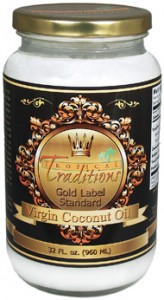
Product Review: Tropical Traditions Pure Virgin Coconut Oil


*Seeing as how this is my first product review, please be patient/understanding with me!*


A couple of weeks ago I received a jar of Tropical Traditions Gold Label Virgin Coconut Oil. When I first opened it, I was a little confused. It was rock solid! LOL The next day, after sitting in my sauna-like house, it had softened up so I began my experimentation with the coconut oil!
Skin
Before I get into the review, let me explain something. Last winter I noticed that my skin had changed. For some reason (not sure if it was due to diet, medication or what) it had become extremely dry. Regardless of how much lotion I slathered on in the mornings, by lunch my legs and arms were not really soft & smooth. I'd read that coconut oil was beneficial for skin as well as hair, so I figured I'd try it. I began using it with the Vaseline intensive care that I usually use, and noticed that it actually lasted! So I started using just the coconut oil and I love it! I can tell a difference in my skin's overall appearance, even fresh out of the shower before I put it on. The biggest difference can be seen on my elbows. They weren't as smooth as I'd like since they're always rubbing against the rather rough arms of my office chair. After only about a week of consistently using the coconut oil they are so soft & smooth! I'm trying to find some way to incorporate the coconut oil in some kinda homemade foot scrub. (#random: I *heart* DIY pedicures, even more than going to get my feet done professionally.) All in all, I am extremely pleased with the results and I'm definitely gonna continue using virgin coconut oil as a part of my daily skin care regimen

Hair
I am not as pleased with the results of using coconut oil in my hair. I tried using the coconut oil and EVOO as a hot oil treatment and I followed the steps that I found online to the T. I was expecting super soft tresses after that; the results were less than stellar. Fortunately I've never really had a problem with really dry hair, so it's not like this was a major issue. But still, for all that time & effort, I felt like there should have been a noticeable difference. I may try this treatment again and either let it stay on my hair longer, not use a shampoo when I wash it out (or use one that's sulfate-free), or try mixing in other ingredients. I'll update with a part II on how that turns out, should I do so. In the meantime, I am using the coconut oil occasionally just to oil my scalp, especially around the edges. No big TA-DA or anything with that, but at least it gives my hair a nice lil shine when I do it.

Overall, I think I will continue using PVCO, but probably more so for my skin than my hair. Has anyone else used PVCO for their hair and seen positive results? If so, share your secret, por favor!